If you’ve been following for a while, you may remember that at the beginning of quarantine, my husband and I bought flooring. We bought enough flooring for the entire house, and if you want to read more about that, you can find it here.
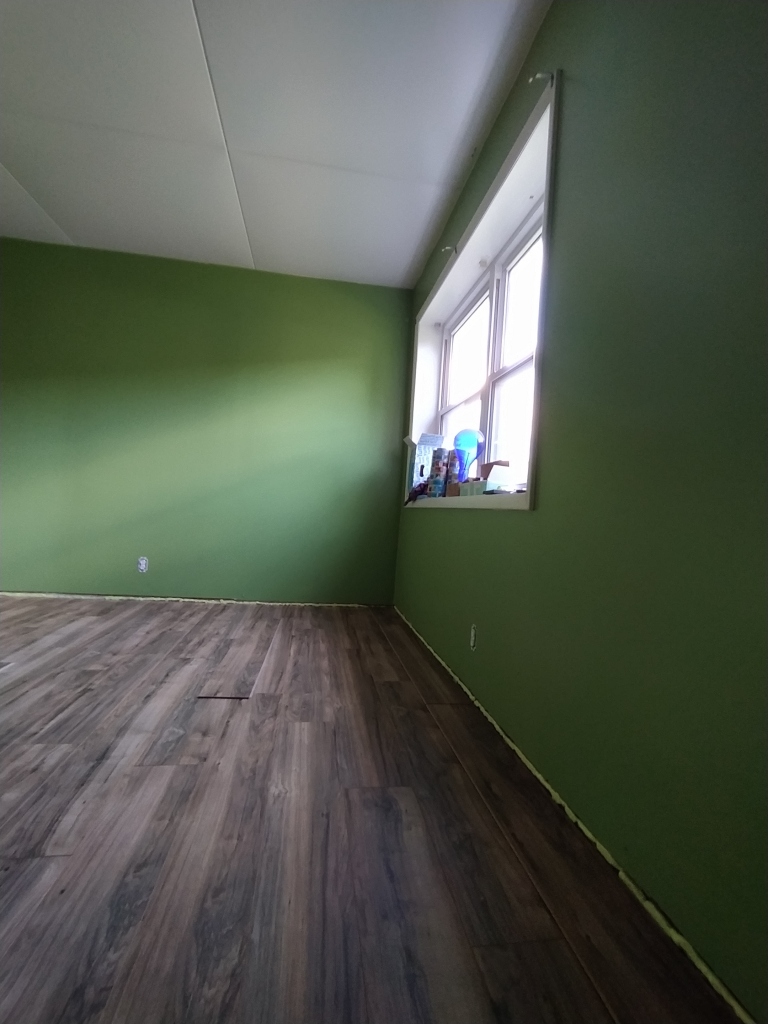
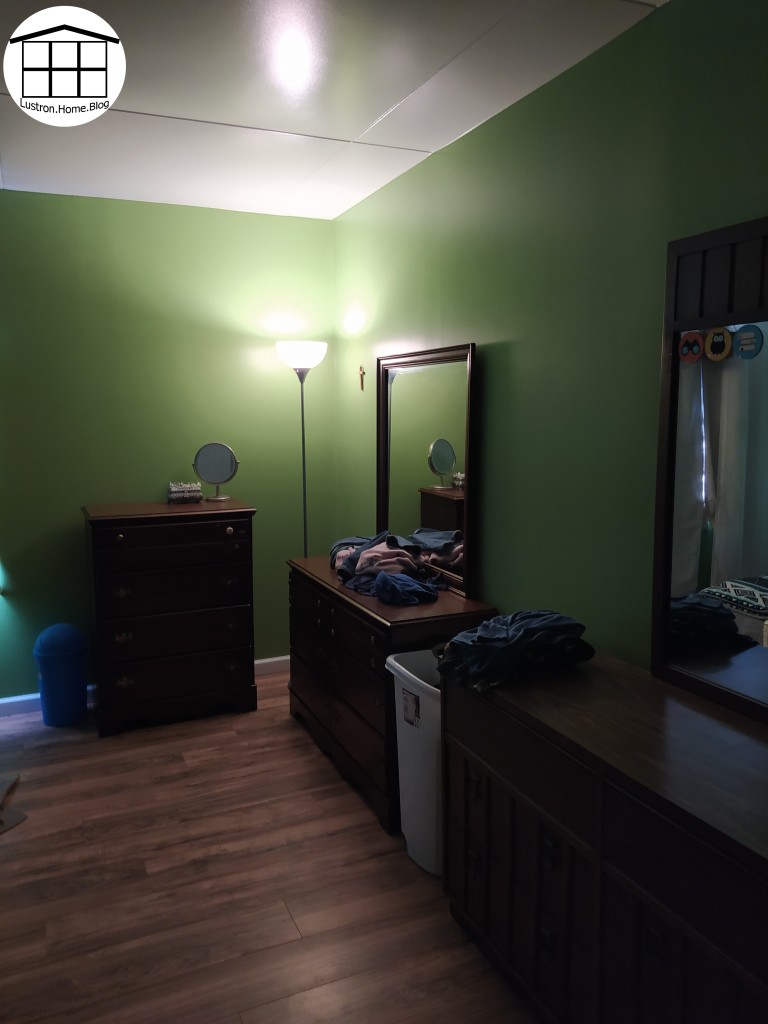
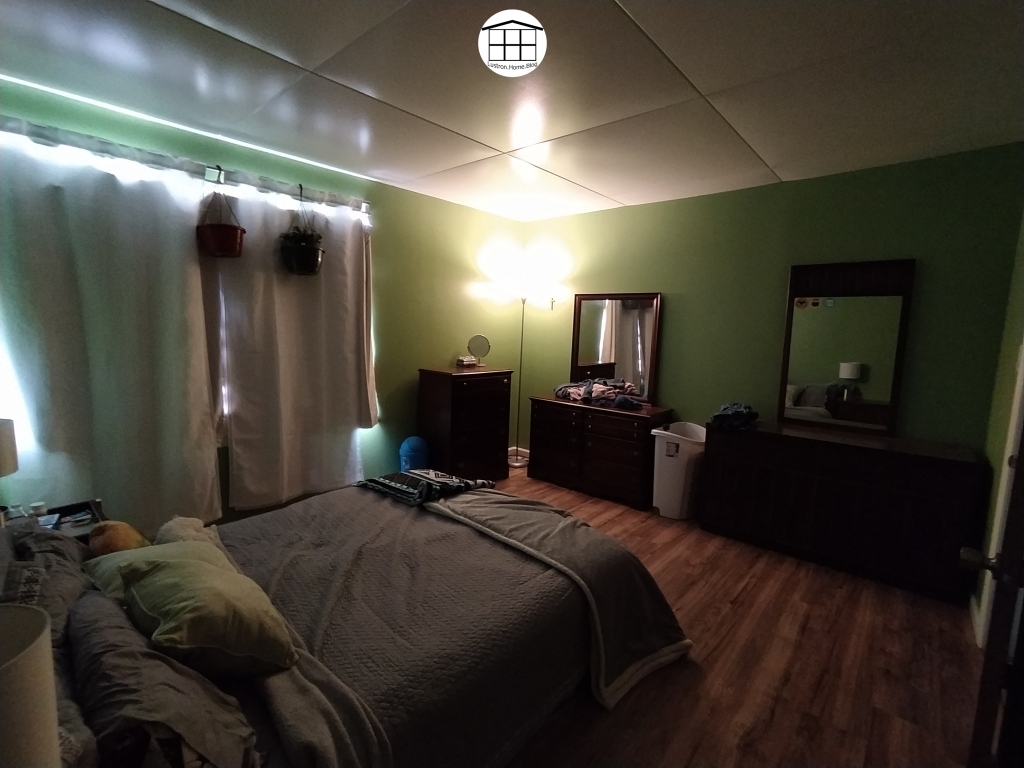
Up until now, I have only posted our guest room being done, however, we had also started our master room, and now it is finished. The process we went through was the same as our guest room, so if you would like to visit that, you can by clicking here.
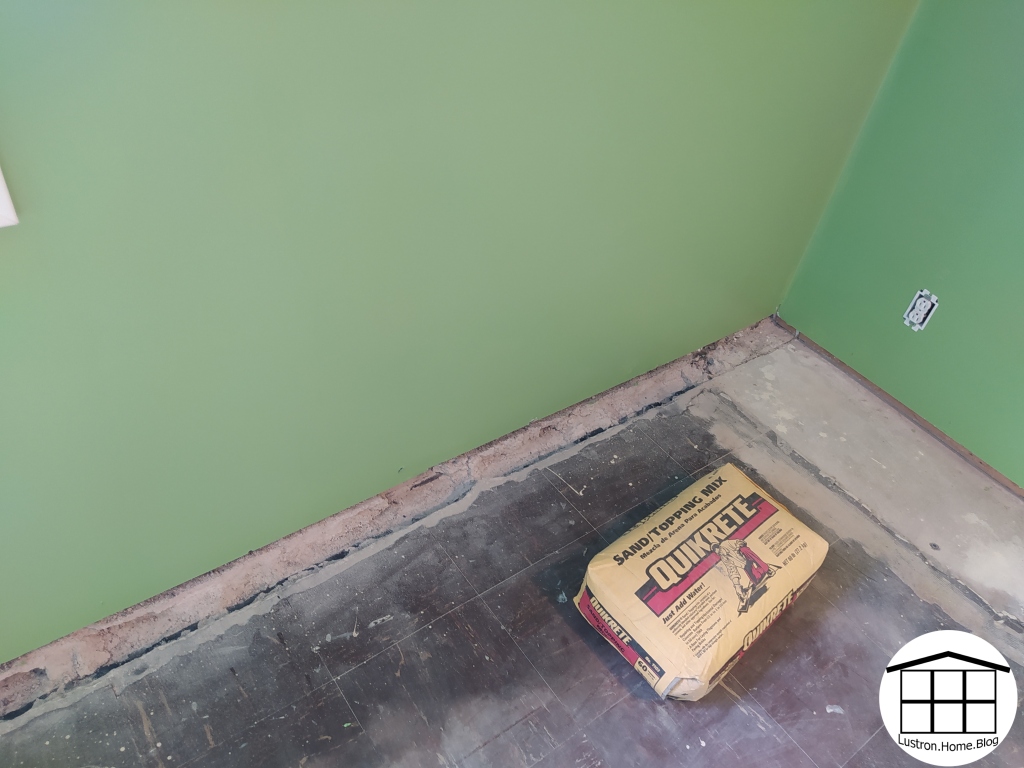
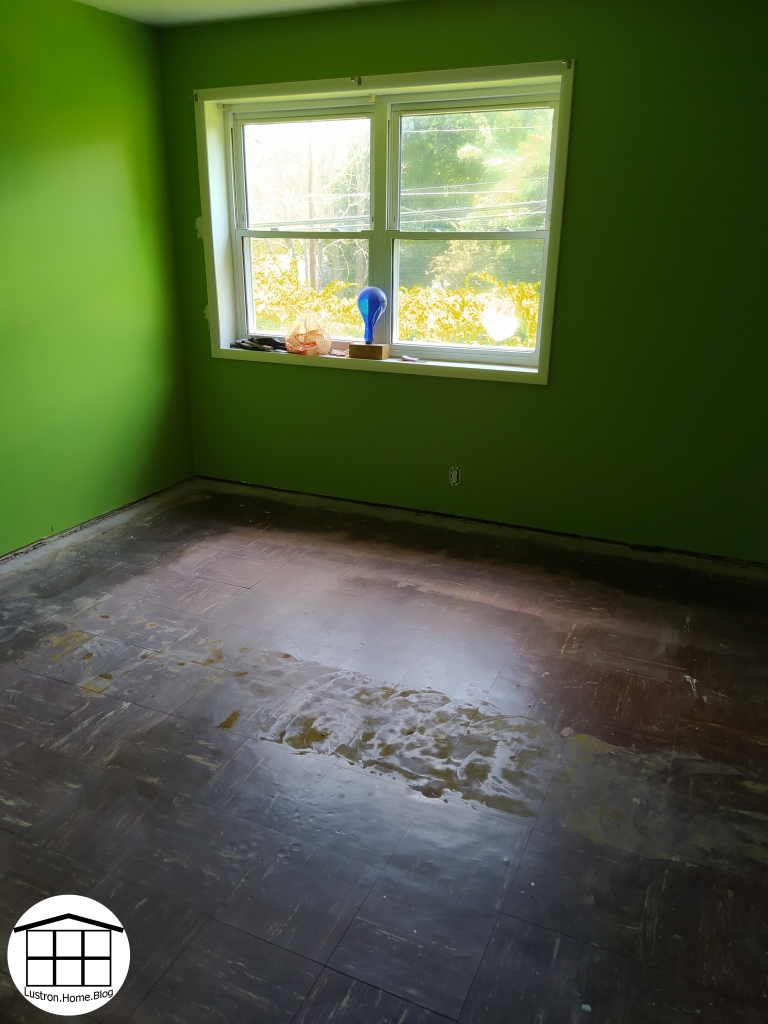
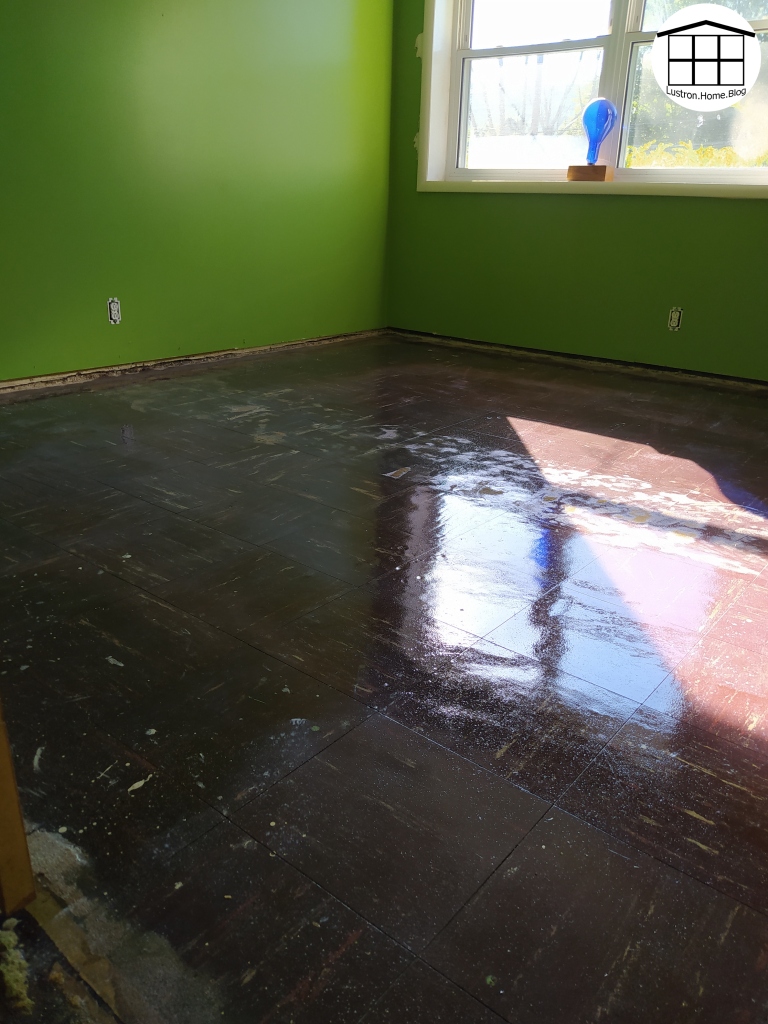
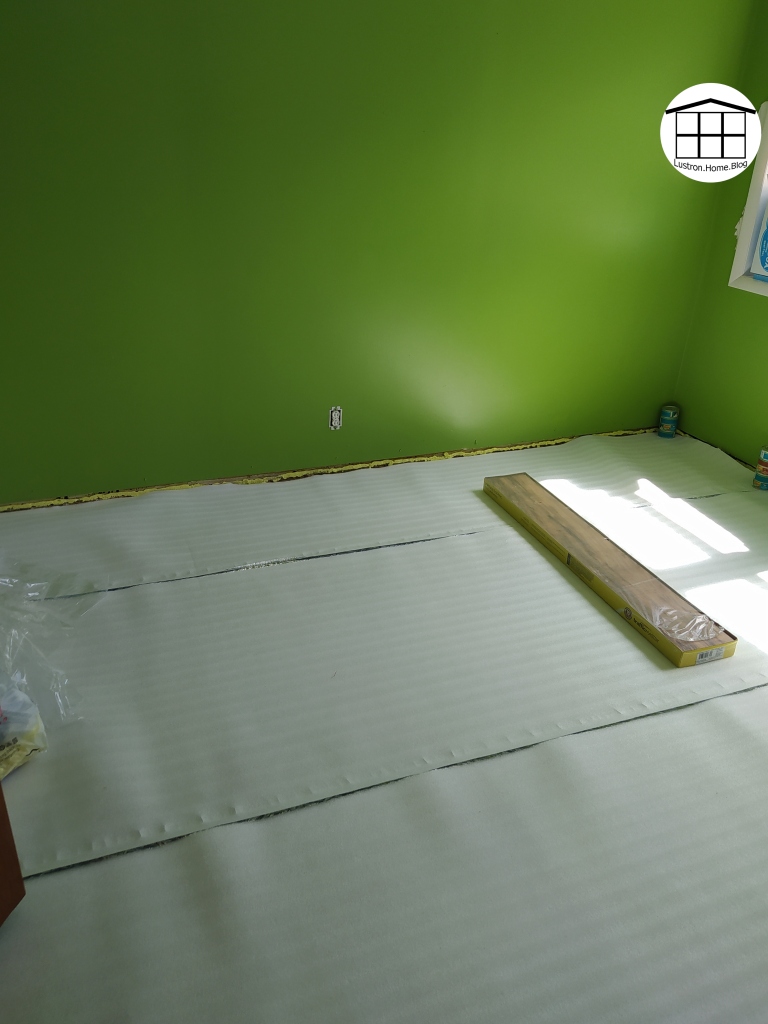
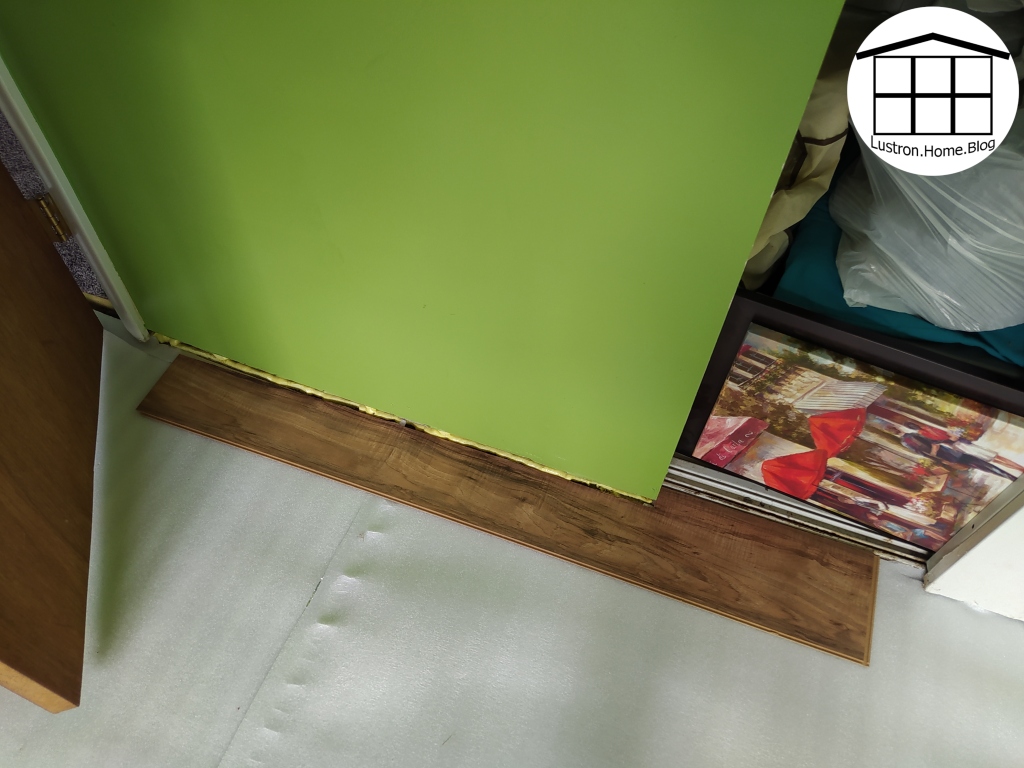
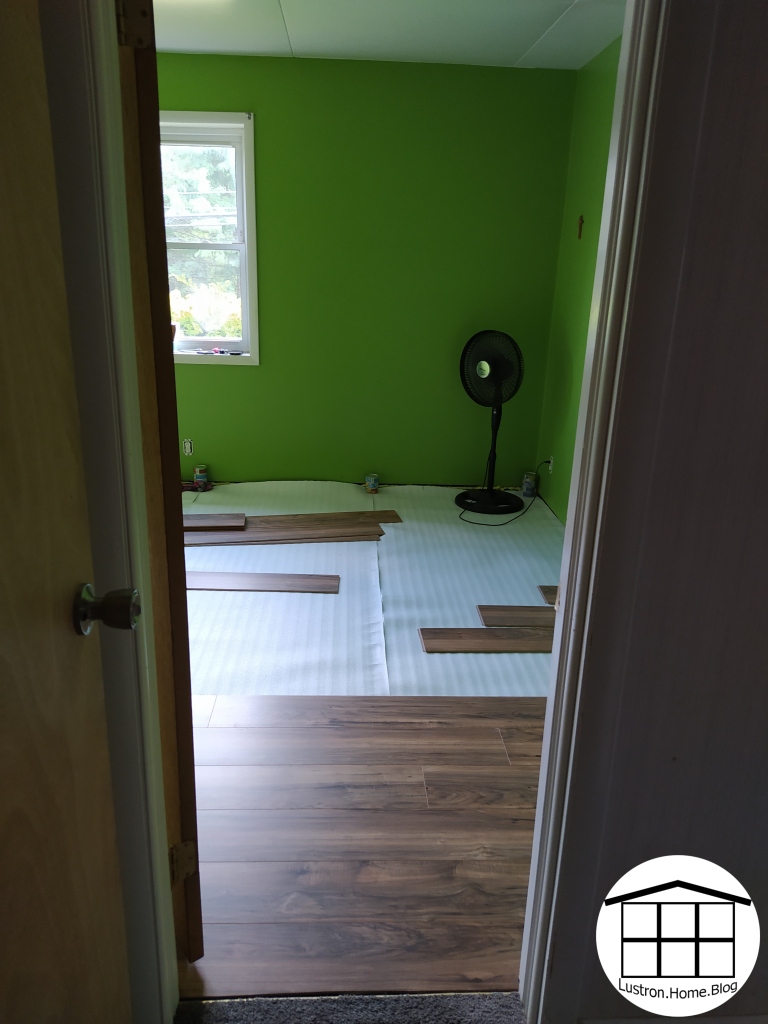
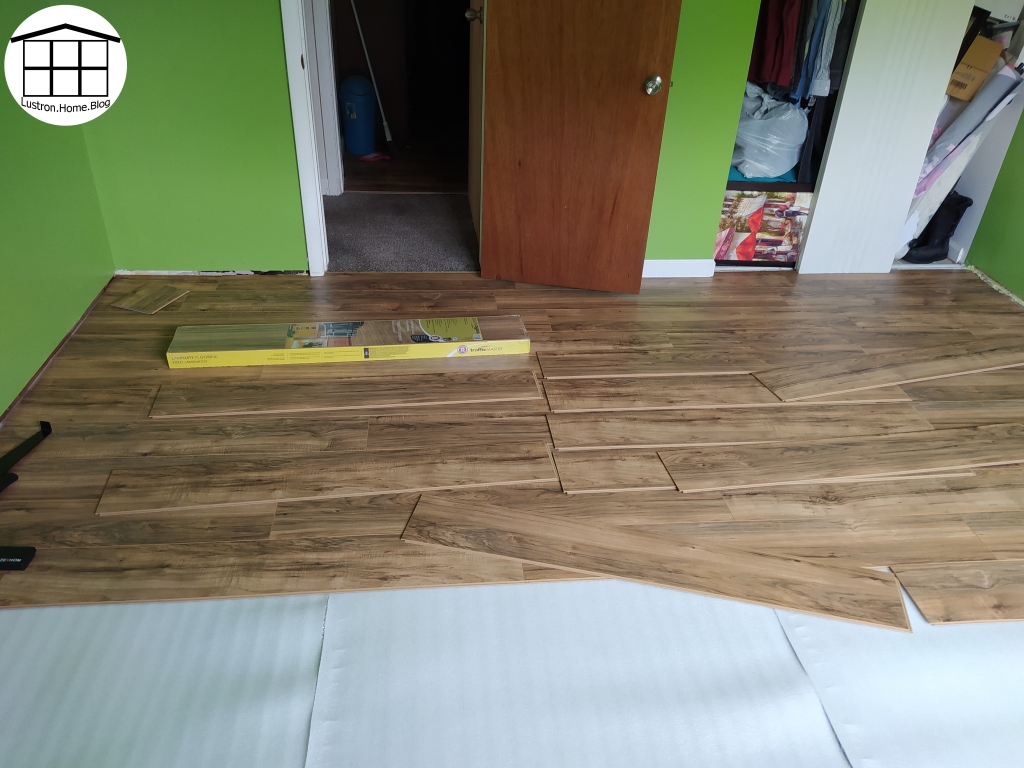
Differences with our master was, I painted the walls before I painted the floor, and the floor was in much worse condition than the guest room. There was quite a bit of mold/mildew on the bottom of the underlayment. The underlayment was also much different from the guest room with a plastic coated foam instead of the exposed porous foam that was in the guest room. Many floor tiles were also loose, but they all sealed back down with the coating of sealant paint. The only other hiccups that occurred doing this room where the fact that the walls were never primed, so in one spot when we were removing the painter’s tape, the old paint pulled off the wall in two small spots, and since the first row of flooring wasn’t perfectly straight and we were tapping boards a lot more than last time, we were having trouble getting the boards to lock together fully about 3/4 of the way through.
Removing Old Carpet
Painting Walls, Chipped Out Cement Edge, and Filling with New Flat Cement
We started this project near the end of June, and by early July we had everything done but painting the trim. Though I like to make a post whenever we do a project, I am learning to wait until the entire project is done instead of posting when everything is “mostly” done. So, the end of August, we got some exterior paint and were able to finish this project. We’ve been working on other projects almost constantly, so it was something we had to get back around to.
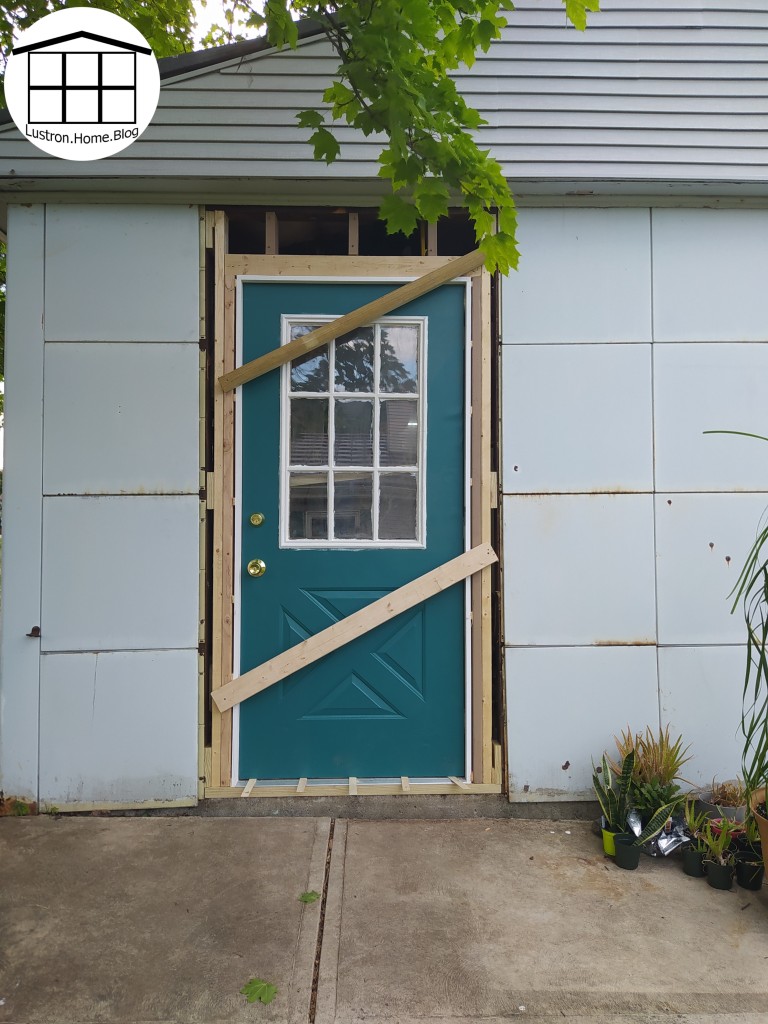
Lustron garages are similar to the house, but there are some construction differences. For example, the house is entirely steel construction, whereas the garage is all wood construction. This made it much easier for us to add the door. The panels are the same between the house and the garage. The panels are attached in only three corners, and what keeps it together is the panels being nested. from the front, the panels are bolted on the left corners and the right top corner. When the wall was assembled, it was assembled from the left bottom corner to the right top corner. The metal shingles are also the same as the house, however the roof design is different. Lustron garages were a secondary thought to this company, and most of the time were just assembled by some contractor the way they would build any other structure. For that reason, you will find must more variation between garages than houses. With that out of the way, you can look through how we added our door. We bought a previously owned steel door for $15 that came with hinges, but was not hung. We would have liked a door that was already hung, however we didn’t want to spend a fortune on a door either, so we went with what we could find, I painted it, and we attached to a door frame that we made ourselves.
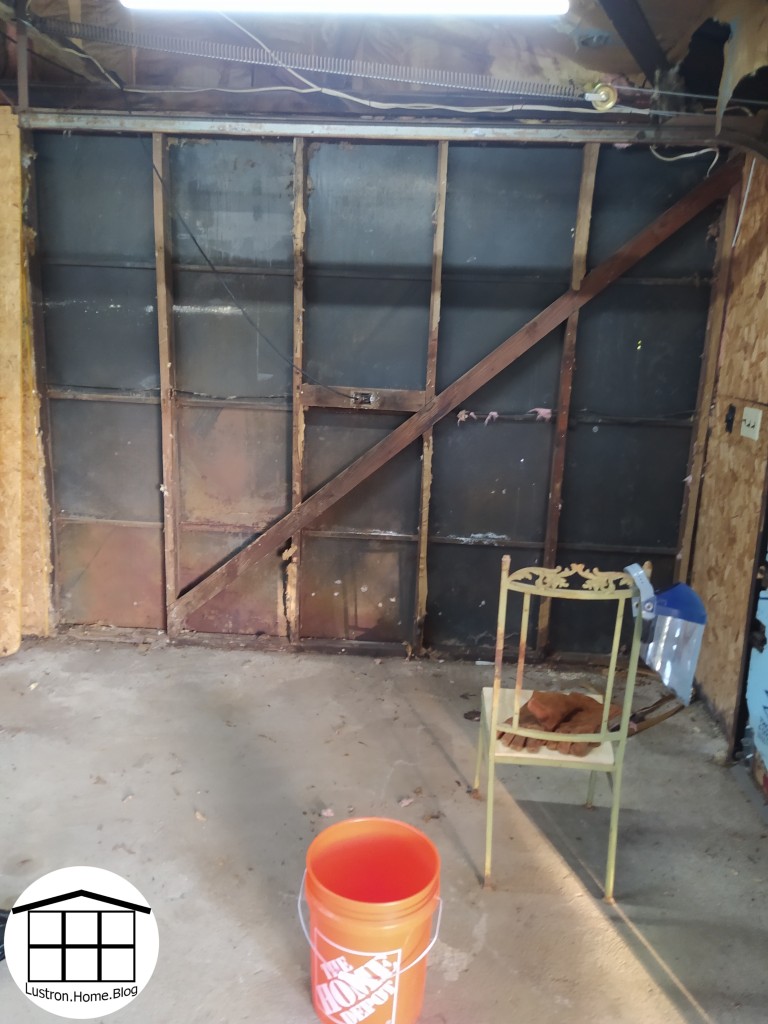
The first thing we did was figure out where-ish we wanted our opening. We had originally planned to more the door so there were two existing panels between the door and the corner. We knew we’d have to move our electrical if we did that, but there would be enough room for the upright freezer and some storage shelves. When we pulled down the wall and could see the footer, there was already an original foundation anchor in it, and though we may have been able to remove it, we didn’t want to mess with the original structural integrity. Before you pull down your wall, you will need to find your studs, but once you do, you can tear out anything in the wall, in our case it was insulation, and clean your work space.
We decided to move the door a segment to the left, and Josh began cutting. As I mentioned earlier, since the panels were assembled a special way, we had to disassemble a special way. Using a sawzall, Josh was able to fit the blade between the panels and studs to cut the bolts. Once all a panel’s bolts were cut, it could just slide right out. We did end up damaging a few panels this way, but many of these panels were severely rusted and some even rusted through. Once that was done, we cut out the existing stud and cross support, and cut the existing footer in the door way to make room for a new threshold.
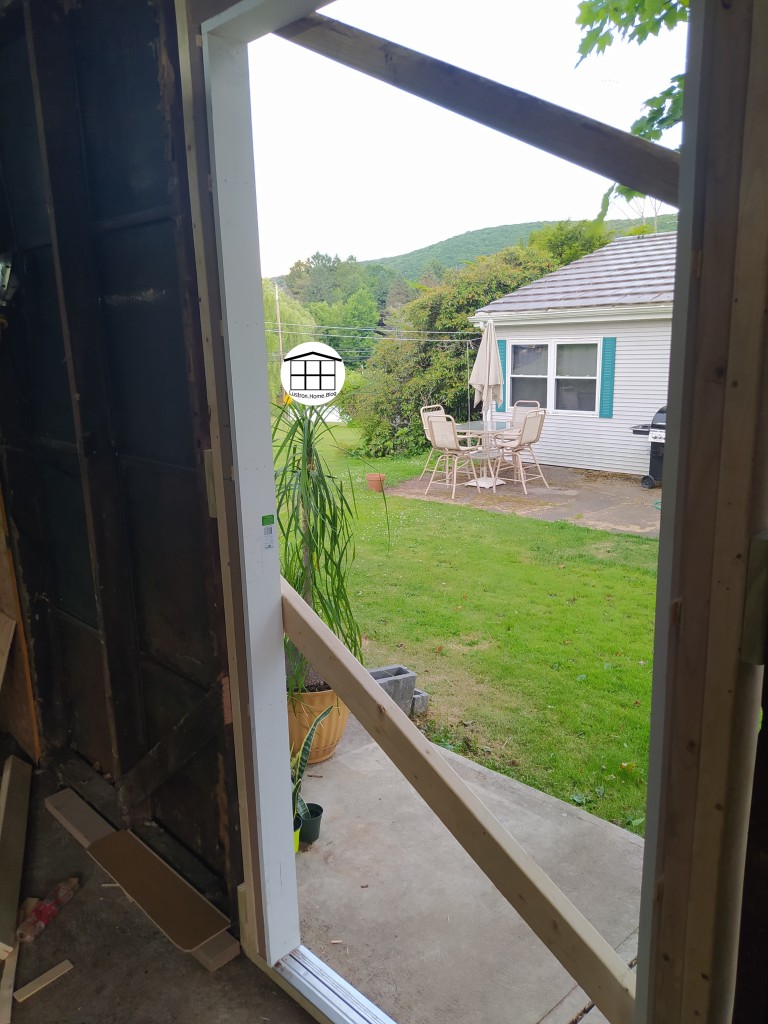
Once the opening was done, it was all framing and adding the door. First, we added our threshold, and added on anchor into the cement. Then we rough framed the door. We gave ourselves an extra 3 inches for the door and roughed in the opening. We made spacer blocks then added our 2x4s up to the header. There we added shorter 2x4s that were slightly higher than the door, and nailed them to the existing 2x4s. This whole time before we nailed anything, we were adjusting the boards to be as close to level and as close to square as we could get. We added a top plate to the shorted boards and attached it. We added some smaller pieces to attach that to the actual header, then we called it a day because our we found out our well switch had broken (thankfully we keep a spare). We added plywood for the night and got back to it a few days later. We then cut the door frame, cutting the sides before the top, shimmed it in place then nailed it. We added our final threshold and then we took a few more days off before returning. When we came back, we hung the door. First, holding the door where it would be if it were open, we marked the hinge locations. We had enough room that we didn’t have to set in the hinges, but you may have to do that if your space is too tight. Josh pre-drilled the holes, and I held the door as he attached each hinge.
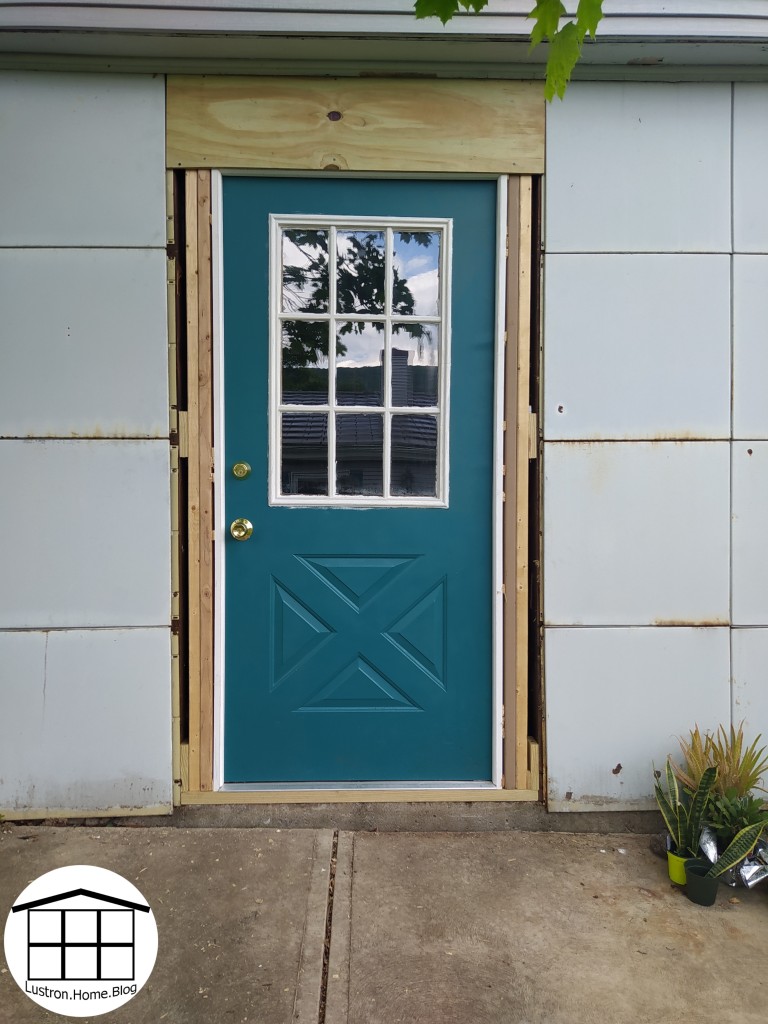
Josh then cut our top trim piece and mounted it, then he cut and mounted each side piece. We added new hardware to the door, and spray foamed around the framing of the door. We left it like that until I was able to paint the trim to finish the project.
It all started with my Starting Point post. There I wrote my initial thoughts and ideas for this house as recorded last November. We bought this house and found many things wrong with it. We starting putting work into the house starting last October/November, and below is what we were able to accomplish so far.
Current Progress
As you can see just between the first set of photos and the second, we’ve made some big changes. We removes trees and bushes, put in raised beds, added an exterior door on the garage, and changed the accent color on the house from red to teal. Inside, we removed a lot of the latex paint off the utility room walls, we built and removed our builtin pantry, and installed a storage shelf instead. We removed the broken dishwasher and sealed the space to be used for my canning stuff. We also upgraded the light in the kitchen, painted cabinets, remove the old range microwave and added a new range-hood, as well as replaced the old leaking kitchen faucet. In the dining room, we refinished the wall after removing about 1/3 of the wallpaper in the house, and we also created a lampshade for our single handing bulb from a lantern we used at our wedding reception. We haven’t done too much to the living room yet; we added a projector screen and are mainly using it for storing some of our extra stuff until we finish the master bedroom. We replaced the light fixture in the hall, and upgraded all the light switches in the house to the rocker style. We repainted the bathroom, removed the medicine cabinet, changed the light fixture, and painted the vanity and changed the hardware. We also added a new shower curtain to match. In the original green room, due to it’s carpet color, we originally replaced the floor in the closet with vinyl planking. After seeing how easy it was, we took on the task of redoing the entire rooms floor, which was not an easy task. we remove the wood from the closet to be replaced with matching floor eventually, I also painted the bedroom the two shades of orange, we moved in, and that is the state of our orange room. Finally, our current project is the master bedroom, or our new green room. We just finished laying the flooring on Saturday. There is still a lot of work we want to do in that room before the new unveiling, but I hope this helps build some excitement for the next unveiling, which will be coming in the next two weeks or so.
A Year’s Worth of Projects
A year is so long, yet so short. We were able to accomplish so much because of the blessing we’ve received this year and from taking things in stride. We are happy for our new experiences and are content with this house even as we continue to find more problems. We aren’t sure if we’ll keep this house forever, but we are happy for all the good things this house is providing for us. This Lustron gives my husband and I something to do together, to bond over, and to dream for. We hope for nothing but the best for this house in the future, and we hope our fingerprint on this house improves the beauty of this old Lustron, rather than hinders it’s potential.
For more on our home improvement posts from this year, feel free to check out any of this posts below. If not, I’ll see you again soon!
If you’ve been following me for a while, you may remember my post back in January or February about my DIY Hidden Pantry. This pantry was very helpful, and very convenient, however over time, the screws began to pull from the wall since we didn’t use drywall anchors. Also, the pantry was too small for all the snack foods I had and needed to store. We eventually began to store bags of chips on the fridge just because they wouldn’t fit in the space anymore.
Josh and I want to eventually put in built in cabinets around the fridge, however, we want to see how we can use our space in the meantime. So, we decided to get a shelf from target, and if it’s very useful, we’ll eventually add doors, or install all built ins. With built ins, we hope to also re-arrange our washer & dryer, but one step at a time.
The shelf we got is the 5 shelf bookcase from target, and we picked the color black. It was easy assembly, and gave us so much more space. Each shelf holds 30 pounds, and the shelf is shallow enough to not interfere with the dryer door.
I knew I would eventually need a range hood after the day I spent frying food: doughnuts, french fries, and chicken nuggets. The smoke and smell was quite unpleasant after several hours of frying, and the microwave fan wasn’t doing anything to help. I’ve had my eye on range hoods since then. With the new stimulus check, we decided a range hood would be a good thing to invest in. Beyond that one experience, I often steam up the whole house when I boil water, and I would like to be able to vent without having it stay in the room. Also with the microwave above my oven, I don’t have much room when I use my bigger pots and I would like to have a bit more head space there. I also have a nice smaller microwave from when I was in college that I could start using once I got a range hood.
The space the range hood would have to fit was 32 inches. I searched around a bit and found a 30 inch stainless steel hood that was under $60, linked here (not sponsored). The listing for the item is a bit messed up on home depot, however the link above was what I ordered and I received the 30 inch hood and not the 24 inch hood.
For now, Josh and I have decided to not vent. We’d like to get the line run before winter, but we have lots planned for this summer, so we’ll see if we get there. To remove a microwave range, you should look up your model of microwave, but we only had to remove the 2 mounting screws on the front. Once the two screws were removed, we had to lift up the back of the microwave to pull it off it’s mount. Of course we unplugged it first, and cleared the hole around the plug, so it could slide out once the microwave was down. Then, we removed the bracket attached to the wall. We had to make spacer blocks for the hood, since we wanted it to be level. We mounted the hood with 4 screws like suggested, and it was already in the configuration for vent-less when we opened the package. Mounting was difficult because it was heavy and gets heavier the longer you hold it. We also found the mounting slots to be weak and flimsy, so we screwed it into the wood by going straight through the thin sheet metal of the hood. We also used a large drill bit to drill a new hole for wires in the cabinet. This hood does not come with a plug, and they expect you to hardwire it in. However, Josh has lots of extra parts, and since he had a cable from an old laptop charger, he was able to wire on a plug and plug it in where the microwave was before. It was a bit of a long night, however, I’m extremely pleased with my new hood and am so happy to have the extra head space and bright light. We are far from finished with this project, but I’m very pleased with how it is now.



















 Our Lustron Home