Pumpkin bread is another simple way to use up any extra pumpkin you may still have. I roasted my pumpkins before I blended it into a puree for these pumpkin recipes. This bread has lots of seasonal flavor and is very easy to make. This bread has good moisture, a good bread/cake texture, and is not overly sweet. I was able to make 3 loaves from this recipe, however, I only filled my pans half way, so if you want bigger loaves, just fill your pans a more, but leave about 1/2 an inch for expansion. This bread is also very similar to a zucchini bread, just with pumpkin and with festive spices!
1. Heat oven to 325 F. Spray bread(s) pan with non-stick spray then coat with flour. In a mixing bowl, creme together sugar and butter. Once combined, begin adding oil and eggs slowly. Add your spices, baking powder, and baking soda, then slowly mix in flour, and finally, mix in your pumpkin and stir until fully combined.
2. Fill bread pans to 1/2 to 3/4 full. Bread will not rise much. Bake bread for 65-70 minutes until tester comes out clean. Remove from pan and let cool to room temperature. Once cooled, eat within a week, or wrap with two layers of cling wrap before freezing.
Potatoes can be found easily this time of year. The other day, I posted about cubing and freezing potatoes, but this is another way of preserve potatoes. Shredded potatoes go well in casseroles, or fried as pancakes. These are also very easy to make and they take very little time to process and freeze. 8 medium potatoes will give you about half a gallon of shredded potatoes. I made 2 batches at once, and I froze each meal individually, since they freeze into a solid block.
Shredder attachment for food processor/mixer, or Cheese grater
Dutch Oven
Large Bowl with Ice Water
Strainer
Freezer bag/Vacuum Seal bag
Directions
1.Clean your potatoes and shred using your shredder. In a dutch oven, fill 3/4 full with water and bring to a full boil. Prepare your Ice water.
2. Add the potatoes to the boiling water a handful at a time. Once added, boil for 1 minute. Strain and add to ice water.
3. Once cool, strain again, and let strain for 30 minutes, stirring every 10 minutes. Transfer potatoes into a freezer bag/vacuum bag. Remove air from bag, label, and freeze. This is enough for one serving, if you want smaller servings, freeze separately.
Potatoes can be found easily this time of year. If you’ve already harvested, or know a local farmer, you too may also be facing a surplus of potatoes. Last year, I bought 25 lbs from a local farmer. This year, we decided to buy 30 lbs with how discounted they were. So, this is one of the ways we decided to preserve potatoes; cubing, blanching, cooling, straining, then freezing. I use these potatoes for many meals. I mostly use cubed potatoes for mashed potatoes, and a base for creamed dried beef, but there are many things you can do with your potatoes once they reach this point. You can bake or fry them from this point too. 6-8 medium potatoes will give you about half a gallon of diced potatoes. I added 2 batches to the bag below, but you will want to freeze each meal individually, since they freeze into a solid block that will not break apart easily if you only wanted to use half at a time.
6-8 Medium Potatoes, Cleaned, Peeled, and diced into about 1 inch cubes
Dutch Oven
Large Bowl with Ice Water
Strainer
Freezer bags/Vacuum Seal bags
Directions
1.Prepare your potatoes. In a dutch oven, fill 3/4 full with water and bring to a full boil. Prepare your Ice water.
2. Add the potatoes to the boiling water a handful at a time. Once added, boil for 7 minutes. Strain and add to ice water. Once cool, strain again, and let strain for 10 minutes.
3. Once strained, transfer potatoes into a freezer bag/vacuum bag. Remove air from bag, label, and freeze. This is enough for one serving, if you want smaller servings, freeze separately.
Shrimp stock is easy to make and versatile in many recipes. Shrimp stock can be used in soups, sauces, and additional flavoring in many recipes. First, stock should be seasoned to your liking. I added some of my seasoning to the recipe below, but I also added additional garlic powder and salt to taste once strained. Second, if you are using a finer shell for your stock, you could also strain through a cheese cloth and I would recommend that. I froze my stock. I froze about 2 cups in a larger container, and I froze another 4 cups as cubes. You can boil your broth longer to boil off more liquid which will make a stronger broth. I also didn’t strain off any fat/oil from my stock. If that is a concern of yours, you can remove your oils before preserving. This recipe makes about 5-7 cups of stock.
Heat a frying pan/dutch oven over medium high heat. Add butter and shrimp shell together, and cook for 1-2 minutes or until butter begins to brown. Add Onion and 1/2 of water. Bring to a high boil. Once boiling, reduce heat to medium, add remaining water, and return to a simmer. Once simmering, reduce heat to low and cover. Cook for 3 hours stirring occasionally.
2. Once cooked, place strainer over another container and strain out your stock. Discard shells and onion. Use right away, or let cool for 1 hour.
3. Once cooled, you reach the preservation stage. You could place it in the fridge, pressure can it, or freeze it. If you plan to keep it in the fridge, move the stock to several Quart Jars and store for no more than 4 days. If you choose to freeze, there are many approaches. You can freeze in 2-3 cup increments in glad containers, freeze your broth in glass jars with the lid off then add the lid when it’s fully frozen, and/or freeze your broth in ice cubes trays then transfer them to a freezer bag. There are many different choices, but these are the most common I’ve seen.
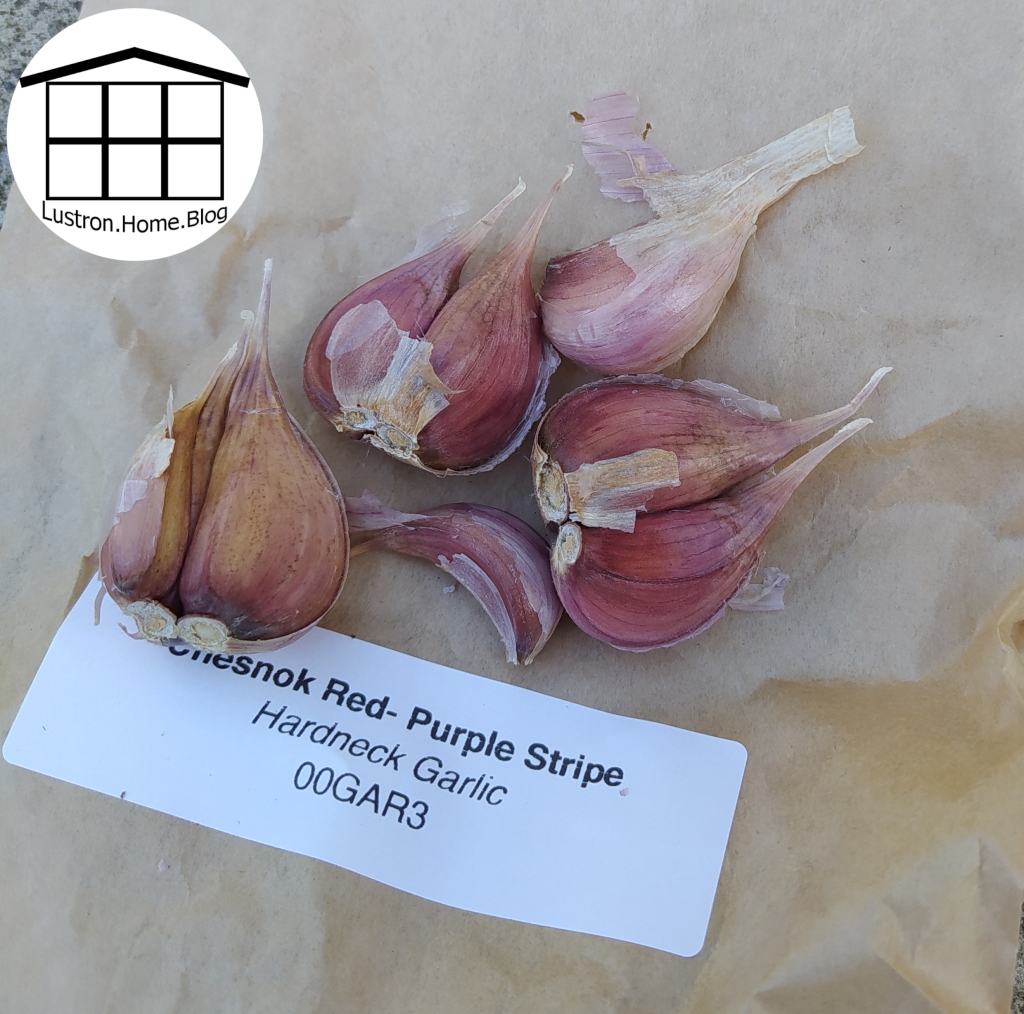
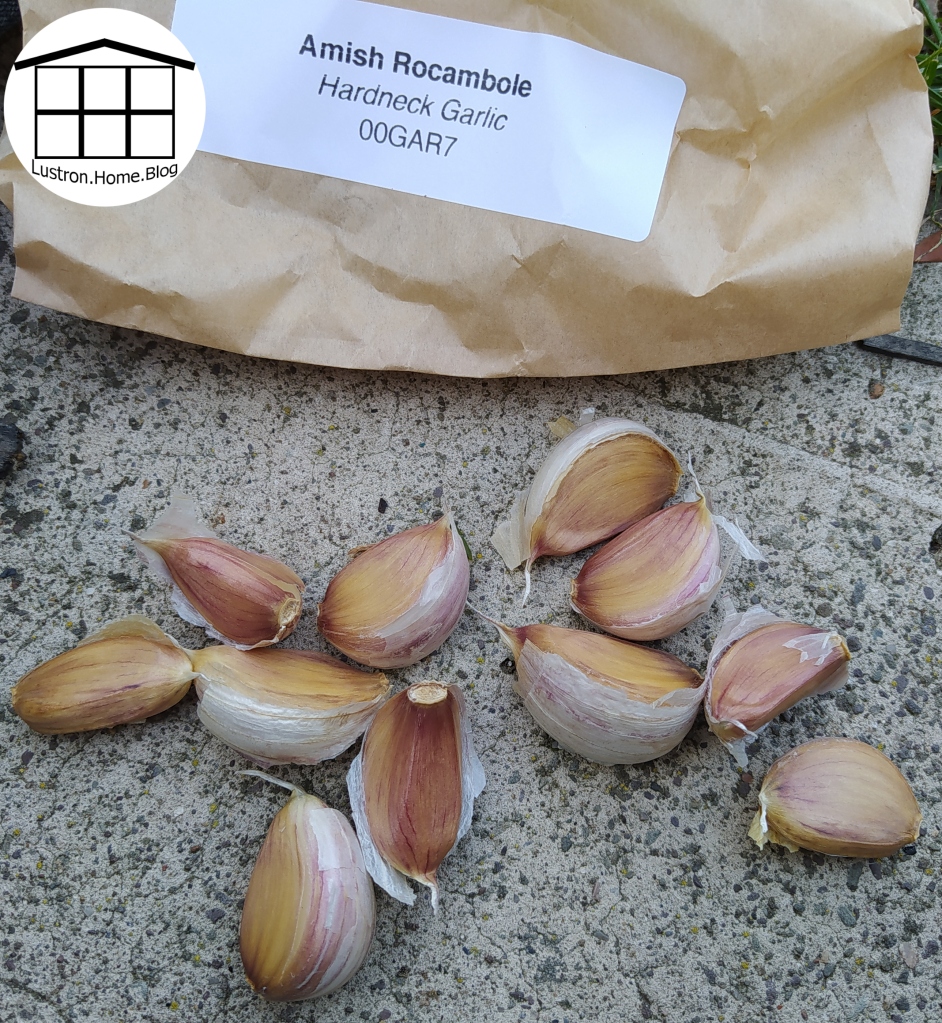
If you follow me on Facebook, you may have seen the post I added yesterday about planting garlic. This is the first year I am seriously trying to grow garlic, and so I’ve done a lot of research and I’m very excited to see what I can get. But, isn’t this garlic gorgeous! I bought these three varieties, all three are organic, disease free, and heirloom varieties. These varieties cam from MIGardener.com. They are not a sponsor, and many varieties are sold out or selling out fast. With that out of the way, before I could plant my garlic, I first had to pull my remaining plants from my raised beds and fabric bags. With this, I was able to save several Parris Island lettuce seeds. I will include those steps at the bottom of this post. I then amended my raised beds, then I planted my garlic.
My first frost day is only 2 weeks away when I planted the garlic yesterday. It is recommended planting garlic at least 3 weeks before first frost, but we just got over a cold snap yesterday where we had 4 nights of frost. The weather is calling for warm temperatures for the next week, so I’m taking a gamble that we won’t be getting another frost for a couple more weeks.
To amend my beds, I first pulled all my plants, but my marigolds. It was just a personal choice to keep them. I think they are beautiful and have a lot of life left in them, so it didn’t feel right pulling them yet, so I just worked around them. To make up for this, I will add some fertilizer in their place next spring to add more nutrients in those spots. Once I pulled the plants, I then pulled down all my netting. This made it easier to move the soil around. Our beds are 8 ft by 4 ft and pressure treated. We added in one fabric bag to one bed and two fabric bags to the other bed. We then split a bag of peat moss between the two beds. We also added 2 bags of aged cow manure into each bed and mixed it all into the top 4 inches of each bed. The reason we added the fabric bags was because the dirt in them had a lot of clay and dried out very quickly. We added 2 bags to one bed because the soil in that second bed was very poor, so we wanted more organic matter in the bed, so we added more dirt. You could also add potting soil if you needed to fill your beds more, but potting soil is expensive, so if top soil were an option, it would be better. I aim for a ratio of 1/3 peat moss, 1/3 compost/manure, and 1/3 top soil for a healthy and balanced soil.
Plant garlic rows 6 inches apart
Plant garlic cloves 6 inches apart in a row
Place garlic cloves 2-3 inches under ground
Cover garlic with 4-6 inches of hay or mulch before your first frost
Plant garlic at least 3 weeks before your first frost to allow time for root development before they go into dormancy
Place chicken wire/hardware cloth over your beds to prevent animals from digging
Uncover garlic once risk of frost has passed
Water garlic often in the fall and spring and fertilize often in the spring and summer; garlic is a heavy feeder
Garlic is ready once the outer 1-2 leafs are dead and dry, any more than that and the garlic won’t dry and will just rot instead
Parris Island lettuce makes yellow flowers, that once fertilized become white fluffs with seeds attached. To get the seed, simply remove the heads that have already gone to seed, remove the stem, then remove the fluff from the seed. You only need a few flowers to get lots of seeds.




 Our Lustron Home